This Week in Dental Implants, we wanted to focus on a new study concerning the use of perioperative antibiotics for the prevention of postoperative infection in periodontal and implant surgery. The study is especially interesting because of its very large sample size (18,505 procedures), span (7 years), and the wide range of treatment options researched. The key story here is that postoperative infection after periodontal and implant surgery appears to be quite uncommon overall, but the risk varies by procedure.
Introduction: Antibiotics in Periodontal and Implant Surgery: What’s the Debate About?
Antibiotics have long been routinely prescribed around implant and periodontal surgery, with the goal of reducing postoperative infection and, ultimately, preventing complications such as early implant failure. However, the routine use of antibiotics has become increasingly controversial. While postoperative infections can have serious consequences, they are relatively uncommon, meaning that large numbers of patients may be exposed to antibiotics to potentially prevent a relatively small number of infections.
The concern extends beyond the individual patient. Antimicrobial resistance is a growing global health problem, and dentistry represents an important source of outpatient antibiotic prescribing. Unnecessary antibiotic exposure can contribute to the development and spread of resistant bacteria, making future infections more difficult to treat. As a result, there has been increasing emphasis on antimicrobial stewardship and determining when antibiotics provide a meaningful clinical benefit.
The evidence surrounding dental implant surgery has not always been consistent. Some research has suggested that a single preoperative dose of antibiotics may reduce early implant failure or bacterial contamination of grafting materials, particularly in more complex augmentation procedures. However, other evidence has questioned whether these potential benefits are large enough to justify routine antibiotic prophylaxis.
This raises an important clinical question: If postoperative infection is uncommon, and the benefit of routine antibiotics is uncertain, can antibiotics be selectively reserved for procedures or patients who are actually at higher risk? Answering that question requires a better understanding of the baseline infection risk associated with different periodontal and implant procedures, as well as the potential influence of grafting materials, membranes, biologics, surgical dressings, and other treatment variables.
Earlier Studies on the Effects of Antiobiotics for Implant Surgery
Before getting to the most recent study on the topic, we wanted to highlight two earlier studies that questioned the use of antiobiotics.
Double-blind trial: Do Antibiotics influence Peri-implant Crestal Bone Remodelling and Morbidity?
This double‑blind trial (38 healthy patients) showed no difference in 1‑year crestal‑bone loss or morbidity between a 7‑day post‑op amoxicillin course and placebo, concluding that:
Study results suggest that a routine postoperative antibiotic regimen for healthy patients undergoing straightforward platform-switched implant placement might not be necessary to prevent postoperative peri-implant bone loss and complications. 1
Multicenter randomized clinical trial: Does antibiotic prophylaxis prevent Implant failure?
This was a multicenter double‑blind randomized clinical trial (474 patients). It found non‑significant differences in infection (0.8 % vs 2.1 %) and implant failure (2.5 % vs 3.0 %) between a 2 g pre‑op amoxicillin dose and placebo.
Specifically, the RCT:
observed no significant difference in the primary outcome measure between the antibiotic (implant failure rate = 2.5%) and the placebo (implant failure rate = 3.0%) group. Absolute risk reduction was 0.46% with an NNT of 219. This means that only about one in every 219 patients will benefit from antibiotic treatment. 2
The study concluded:
The rapid development of bacteria resistant to antibiotics is a worldwide problem endangering the lives of millions…To avoid a post‐antibiotic era, fundamental shifts within the medical and agricultural fields must be implemented where antibiotic use is strictly regulated through clear guidelines informed by solid, evidence‐based research. The results of the present study suggest that the effect of antibiotic prophylaxis in conjunction with dental implant surgery in preventing implant loss is small and may not be clinically relevant. 2
Latest Large Study: How frequent are Post-surgical Infections following Periodontal and Implant Surgical Procedures?
And now to the study that prompted this post. A large retrospective study from the University of Texas at San Antonio examined 18,505 periodontal and implant surgical procedures in 4,601 patients over seven years to better understand the frequency of postoperative infections and the factors associated with them.
3.
The study concluded that:
The post-surgical infection prevalence of periodontal surgery is low. These findings do not support the routine use of perioperative antibiotics as a preventive measure for infections. Rather than implementing routine administration, clinicians must evaluate the necessity of post-surgical antibiotic therapy on an individual basis. 3.
While we highly recommend reading the entire study, which you can find here on the AAP website, the findings that we found most interesting were as follows:
-
Type of procedure matters, with GBR having the highest risk The overall infection rate was just 1.17% per surgical procedure, reinforcing that postoperative infection is relatively uncommon. However, the risk was not uniform across procedures. Guided bone regeneration (GBR) had the highest infection prevalence at 5.08%, followed by peri-implantitis treatment at 2.42%, connective tissue grafting at 2.16%, immediate implant placement at 1.99%, and lateral sinus augmentation at 1.80%. Many less complex procedures had infection rates well below 1%.
-
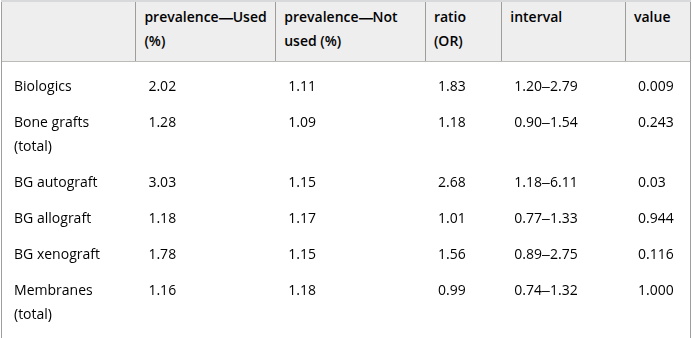
Grafting material may have an effect: While the study found no statistically significant increase in postoperative infection when bone grafts were considered as a whole: infection occurred in 1.28% of procedures using bone grafts versus 1.09% without them. When the investigators separated grafts by type, autogenous bone grafts were associated with a higher infection rate (3.03% vs. 1.15%; OR 2.68, p = 0.03). However, this association did not remain significant after correction for multiple comparisons.
-
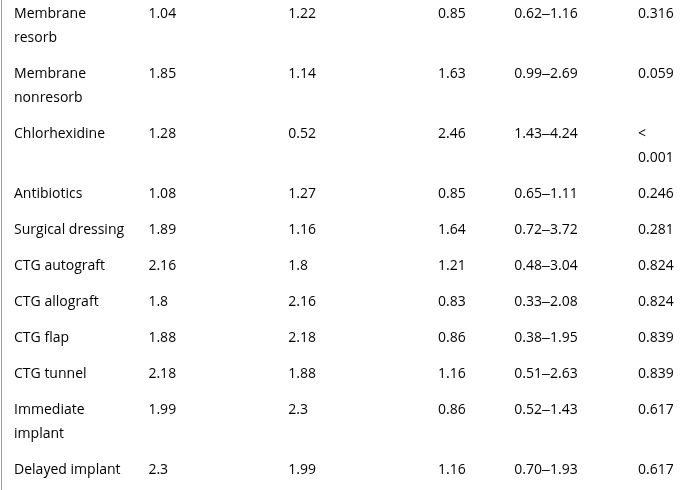
Membrane material may warrant investigation: Membrane use overall was not associated with increased infection risk. Infection prevalence was virtually identical with and without membranes (1.16% vs. 1.18%; OR 0.99). Resorbable membranes actually had a slightly lower infection rate (1.04% vs. 1.22%), although this was not statistically significant. Nonresorbable membranes showed a trend toward higher infection (1.85% vs. 1.14%; OR 1.63), but this narrowly missed statistical significance (p = 0.059). The authors suggest that this may warrant further investigation rather than interpreting it as evidence that nonresorbable membranes cause infection.
-
Wound dressings appear may provide a potential protective effect : The research around wound dressings was perhaps one of the most interesting findings from our perspective. Surgical dressings were used in relatively few procedures (318) and were not significantly associated with infection in the conventional analysis. Interestingly, infection prevalence was lower in procedures using a dressing, and the Random Forest analysis identified surgical dressing as the second-most important variable for predicting infection. However, the authors emphasize that this should be interpreted cautiously: dressings may have been used preferentially in particular types of procedures or by particular clinicians, so the apparent protective effect does not establish that dressings themselves prevent infection. The authors note that existing literature also does not provide strong evidence that surgical dressings reduce postoperative infection.
Summary Analysis of Key Procedures and Treatments
(Note: Images below are from the tables reported in the original study: Banson CN, Palaiologou A, Mealey BL, Font K, Powell CA. Post-surgical infections: Prevalence associated with various periodontal surgical procedures.
TABLE 1. Each surgical procedure ranked by how much their infection prevalence deviates from the overall average.
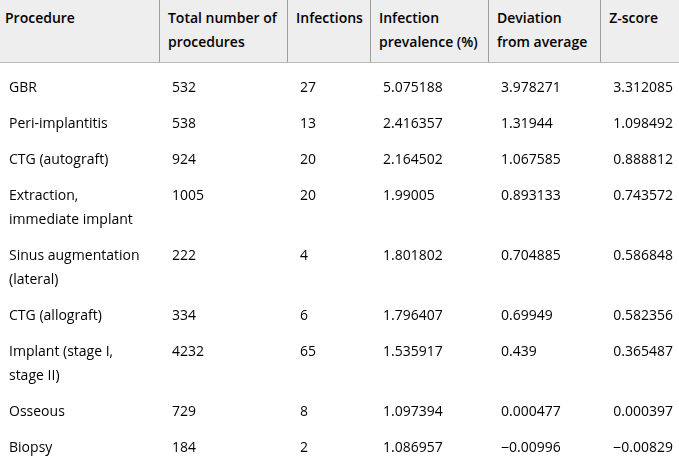
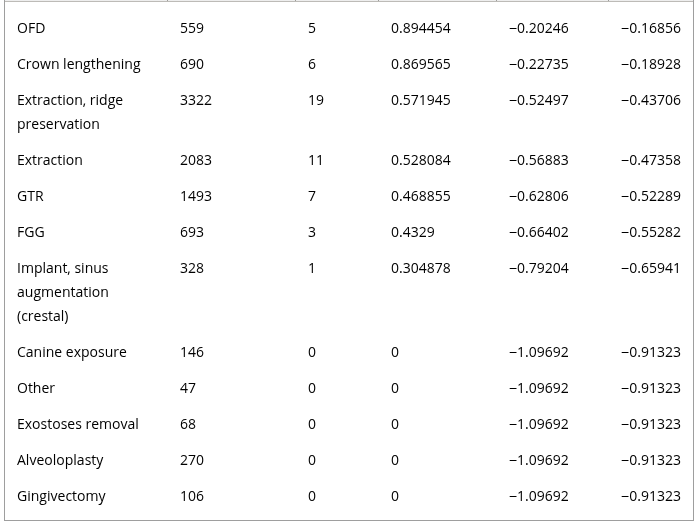
TABLE 2. Univariate analysis comparing postoperative infection prevalence for each treatment variable using procedure-level data.
References
-
Durand R, Kersheh I, Marcotte S, Boudrias P, Schmittbuhl M, Cresson T, Rei N, Rompré PH, Voyer R. Do postoperative antibiotics influence one-year peri-implant crestal bone remodelling and morbidity? A double-blinded randomized clinical trial. Clin Oral Implants Res. 2021 Nov;32(11):1318-1327.
-
Momand P, Becktor JP, Naimi-Akbar A, Tobin G, Götrick B. Effect of antibiotic prophylaxis in dental implant surgery: A multicenter placebo-controlled double-blinded randomized clinical trial. Clin Implant Dent Relat Res. 2022 Feb;24(1):116-124.
-
Banson CN, Palaiologou A, Mealey BL, Font K, Powell CA. Post-surgical infections: Prevalence associated with various periodontal surgical procedures. J Periodontol. 2026 Aug 13. doi: 10.1002/jper.70179. Also see the full article at: https://aap.onlinelibrary.wiley.com/doi/10.1002/jper.70179